

Australian Cattle Dog
Loyal, loving and tough


Cattle Dogs 101
Herding groupThe Australian Cattle Dog, also known as the Queensland Heeler or the Red or Blue Heeler, was developed to handle the toughest cattle on vast Australian ranches. The “heeler” refers to their style of moving livestock, brave enough to nip at the heels and agile enough to dodge a kick. They are devoted to their families, but generally not outgoing towards people they don’t know. Cattle Dogs are solidly built and well-muscled, and they need consistent handling and lots of exercise of both body and mind. They excel in any number of dog sports and are popular with horse owners, especially in the western United States.
 What we love about Cattle Dogs

Fearlesss, faithful and indefatigable
Energy level


Energy level: 100% (Very high)
Bark level
- Very vocal
- Talkative
- As needed



Bark level: As needed. This breed only barks when necessary
Size
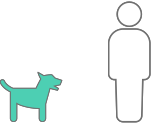
Size: 17 to 20 inches tall. This is a Medium sized Dog.
- Breed Group
- Herding group
- Energy level
- Very high (100%)
- Bark level
- As needed
- Height
- 17 to 20 inches
- Lifespan
- 12 to 16 years
- Weight
- 35 to 50 lbs
The Australian Cattle Dog stands 17 to 20 inches tall and weighs 35 to 50 lbs. Australian Cattle Dogs have a lifespan of 12 to 16 years. They are known for a very high (100%) energy level and a as needed bark.
Frequently Asked Questions
- How big do Australian Cattle Dogs get?
- Australian Cattle Dogs stand 17 to 20 inches tall and typically weigh between 35 and 50 pounds.
- How long do Australian Cattle Dogs live?
- The average lifespan of a Australian Cattle Dog is 12 to 16 years.
- Are Australian Cattle Dogs good for first-time dog owners?
- Australian Cattle Dogs are intelligent but have high energy. They do best with experienced owners who can provide plenty of exercise and mental stimulation.
- Do Australian Cattle Dogs bark a lot?
- Australian Cattle Dogs typically only bark when necessary — they are not known to be excessive barkers.
My pet’s health plannerSM
Mature adult Cattle Dog
Risk level for common Cattle Dog conditions

Cruciate ligament tear (knee)
Ear hematoma
Trauma
Senior Cattle Dog
Risk level for common Cattle Dog conditions
Arthritis
Cushings disease
Splenic cancer
Cattle Dog puppy
Risk level for common Cattle Dog conditions
Foreign body ingestion
Gastroenteritis
Trauma
Young adult Cattle Dog
Risk level for common Cattle Dog conditions
Conjunctivitis
Foreign body ingestion
Trauma
Mature adult Cattle Dog
Risk level for common Cattle Dog conditions
Cruciate ligament tear (knee)
Ear hematoma
Trauma
Senior Cattle Dog
Risk level for common Cattle Dog conditions
Arthritis
Cushings disease
Splenic cancer
Cattle Dog puppy
Risk level for common Cattle Dog conditions
Foreign body ingestion
Gastroenteritis
Trauma
Young adult Cattle Dog
Risk level for common Cattle Dog conditions
Conjunctivitis
Foreign body ingestion
Trauma

Nationwide can help you save on your Australian Cattle Dog's health care no matter what lifestage they’re in.

Australian Cattle Dogs are born white, later developing their distinctively mottled red or blue coats.
Australian Cattle Dog coat care and colors
Although they have short coats, Australian Cattle Dogs have an undercoat as well, giving them the ability to thrive in any kind of weather. Regular brushing will keep shedding low.
Do Australian Cattle Dogs need haircuts?
Do Australian Cattle Dogs need haircuts?
How often should I bathe my Australian Cattle Dog?
How often should I bathe my Australian Cattle Dog?
How do I groom my Australian Cattle Dog?
How do I groom my Australian Cattle Dog?
Cattle Dog exercise & training
Cattle Dog fun facts
Top girl names for Cattle Dogs
of Cattle Dogs are female
of Cattle Dogs are male
Top boy names for Cattle Dogs
Nationwide loves Australian Cattle Dogs of every name, from Aaron to Zog the Destroyer
Other breeds like Cattle Dogs
Best. Australian Cattle Dog insurance. Ever.SM
- Pet insurance premiums starting at $25/mo.
- Visit any licensed veterinarian, anywhere
- Cancel at any time, risk-free